

Your Custom Text Here

Easy hacks to unleash your fittest self!
“Try to be like the turtle - at ease in your own shell.”
Have you been keeping off your fitness goals for too long? Do you want to get started, but don’t know how? Are you too busy to get the workout you need?
If getting started is the biggest hurdle, this article might be just what you need right now.
I. Set those Goals- Be your personal warrior
Each of us has different motivations to workout. Brooke Shields once wanted legs like Steffi Graf while Madhu wanted to stay active around his 2 year old and Neha wanted to go from couch to 5K in 6 weeks.
Whatever your goal, believe in it. Define your long-term goal and then make specific, realistic and time bound short-term goals.
Short-term goals should last four to six weeks. For example- working out 3 times a week for a beginner.
Long-term goals are the end goal, spanning a few months and close to a year. Things like living healthily, lowering cholesterol, losing ten kilos or more (the right way, of course), running your first-half marathon or a marathon, etc.
Remember, that your goal has to work for you- it's your personal journey to become a better you.
Write your goals down- slap it on the fridge door, behind the bathroom door, in front of the closet, or wherever you do your morning thing.
II. Plan your activities for heart-thumping fitness
Identify your favourite fitness-related activities- is it the serenity of yoga that appeals to you, or the music thumping beats in a spinning class or just the breeze on your face during a walk or run or all of them?
Find the activity or the set of activities that get your feet moving and your energy levels up.
Figure out how you'll follow these activities. Sign up to classes, find a training plan, etc.
Set some achievable challenges during each activity. For example, if your goal is to run a 5K, start with walking for 25-30 minutes each day and vary your speed and distance as you get more active. Add a few lunges, crunches and pushups along the way.
III. Time - it's precious!
We’re all stressed for time in today’s busy life. To discover your new rabbit-self, you'll have to get into a routine. Routines slowly help form habits, and the benefits can range from stress relief to regulated blood sugar levels to lower risk of heart disease. Start young, stay young!
Decide how much time you'd like to dedicate on daily and a weekly basis.
Setting some time aside can help you stick to your routines and boost your confidence in the workout or the activity of choice.
Pick a time and stick to it. You can always add to your basic routine and mix your workout to make it more fun in future.
Research suggests adults require 30 minutes of physical activity a day. But dont worry if you cant squeeze in 30 mins in one go. Split it into 15 min sessions and you go for it!
IV. Reward yourself regularly- carrots are important.
Some people are motivated to exercise because they genuinely love it. But if you are one of those people who doesn’t, then rewarding yourself once in a while will drive your motivation to stick to your goals.
Rewards are very personal and vary from one person to the other. You can set up your own rewards and frequency.
Small(daily) rewards :
Put Rs100 in a jar every day you workout (building into a larger reward)
Watch your favourite TV show (only) on days you workout
Open WhatsApp only after you’ve finished your workout
Bite into some dark chocolate after 30 minutes of active workout
Medium (weekly, fortnightly, monthly) rewards:
Watch a movie / game
Shop for one frivolous item online
Get a massage
Eat your favourite dessert
Longterm (3, 6, 12 months) rewards :
Vacation with friends
Splurge on an outfit / watch / shoes
Indulge in a 5/7/9 course meal
Plan something with the kids (and let them know. They’ll ensure you get your workout!)
V. Clean your Diet
Studies show that not only is fast food bad for long-term health outcomes, it can also cause sluggishness, lack of motivation and reduced performance in our day to day lives.
Moving to a balanced, nutritious diet goes hand-in-hand with a good workout as it increases productivity, enhances mood and helps in losing or controlling body weight.
In India, we have plenty of healthy breakfast options like roti-subzi, poha, upma, idli-chutney etc that one can make in minutes. Add freshly chopped carrots, beans etc to make them even more interesting.
Getting started is really a mind game. Follow the process and you will start to see the results. Sometimes, pairing up with a friend, sharing your goals publicly or simply challenging yourself to a 21 day NO MISS workout could do the trick.
Do you workout regularly? What has your first experience been like? Tell us more in the comments section below!
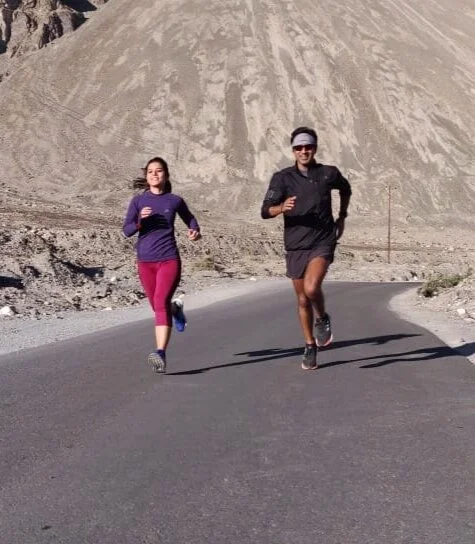
Running Form Basics
Running better is not necessarily about running faster.
Here are 5 good posture tips that will help you run more easily, have fewer injuries and breathe more easily.
“‘Running is the greatest metaphor for life, because you get out of it what you put into it.’”
Running better is not necessarily about running faster.
For me, running is like practising an art form - new skills and techniques to be learnt and practised, to reduce pain, injury and to have continued positive gains as I keep running.
Running with good posture will help you run more easily, have fewer injuries and breathe more easily.
Here are five key aspects of your running form that you should pay attention to.
Think ‘Tall’ - Let’s take it from the top. Imagine yourself as a puppet, suspended from a thread. Remember, the head leads and the body follows. So, keep your head up, and focus on keeping your back straight, your chest and your shoulders level under your ears. Not doing so will restrict your breathing and put strain on your lower back.
To breathe easier, relax and square your shoulders, and do not tense your back muscles.
It is normal to slouch when you’re tiring from your run. Remind yourself to ‘Be the puppet’ and poke your chest out.
A good drill to do is to raise your shoulders up to your ears every km or so, and then drop them back to their normal position. You can also do this as a warm-up.
Eyes ahead, please - It’s safer, it’s better and it will help you focus at the finish line (eyes on the prize, people!). You should look about 10 to 20 feet in front of you. Remember, where the eyes go, your head will follow. And from the above point, we don’t want to do that. So, keep the head up and not stare at your feet.
If you don’t, you’ll land more heavily, and become susceptible to several feet, shin and leg problems.
You will also end up putting tremendous strain on your neck and shoulders- they have to work very hard to keep the head from falling.
Finally, you’ll lean forward and shorten the front of your body, thus leading to more difficulty in breathing.
Swing your arms! Legendary coach Ron Warhurst convinced us that arm swings regulate your leg turnover (more in the next points). So, quicker movements of the arms will help you to get the opposite leg back on to the ground and into your next stride, more quickly.
Keep your elbows bent at 90 degrees, wrists relaxed and at waist level (it’s okay for them to brush lightly on your hip).
When I started out as a runner, I would hold my arms stiffly near my chest and stick them to my sides. Don’t do this! You will tire more and feel your shoulders and neck get tight.
Instead, try to move your arms backwards and forwards without allowing them to cross the midline of your torso.
Remember, coordination in arms movement will give you wonderful power and energy and help you run better. Arms & shoulder strength workouts will help you get better!
Quick feet, knees in line and point those toes forward - Try to maintain short, quick strides that are low to the ground (called stride turnover), make sure that your foot strikes under your knee, not in front of it. Try to be keep your body weight on the balls of your feet.
Always keep a slight bend in the knee, it will help you stick with that forward lean and with changing your feet with ease.
It doesn’t matter whether the heel, your mid-foot or your forefoot hits the ground first (more on this, in another article). Just move quickly, one foot to the other, thus distributing ground forces between your joints, ligaments and tendons.
Also, keep your toes pointed in the direction you want to go - Not inwards or outwards but forwards.
Do not try to lengthen your stride and over-reach with your foot- there’s a greater chance of you getting injured.
If none of the above is your natural movement, you’ll need some practice. Be mindful of doing it over short distances first. Be patient. Some skipping, boxing inspired drills or speed ladder drills or Plyometric exercises help, too!
Synchronise your breathing with your running strides. This it will help get more oxygen-rich blood flow to power your muscles and provide you with increased energy.
Avoid shallow chest breathing while running.
Practice rhythmic breathing and/or belly breathing- it will divide the stress of running between both sides of your body equally, help with foot strikes and The right breathing technique will help you maximise training outcomes, stay relaxed and injury free.
I, like many runners, use either the 2:2 or 3:3 (for low intensity runs) breathing plans. For example, I take two steps to inhale and two steps to exhale during medium-intensity work.
Yoga will really help you improve your breathing skills through controlled focus, specially through pranayama.
Considering the dust issues in our country, it is advised to breathe in through your nose and breathe out through your mouth.
Remember, if you are just starting out, go easy.
Finally, please remember that there is no single running method that will make you faster. Muscle imbalances occur depending on your bio-mechanics, your body-type and a whole variety of other factors. You can easily get a professional fitness specialist to evaluate your running gait and to assess your strength and flexibility parameters.
Now you’re all set to run like a pro.
Just remember to follow the key components to successful running!

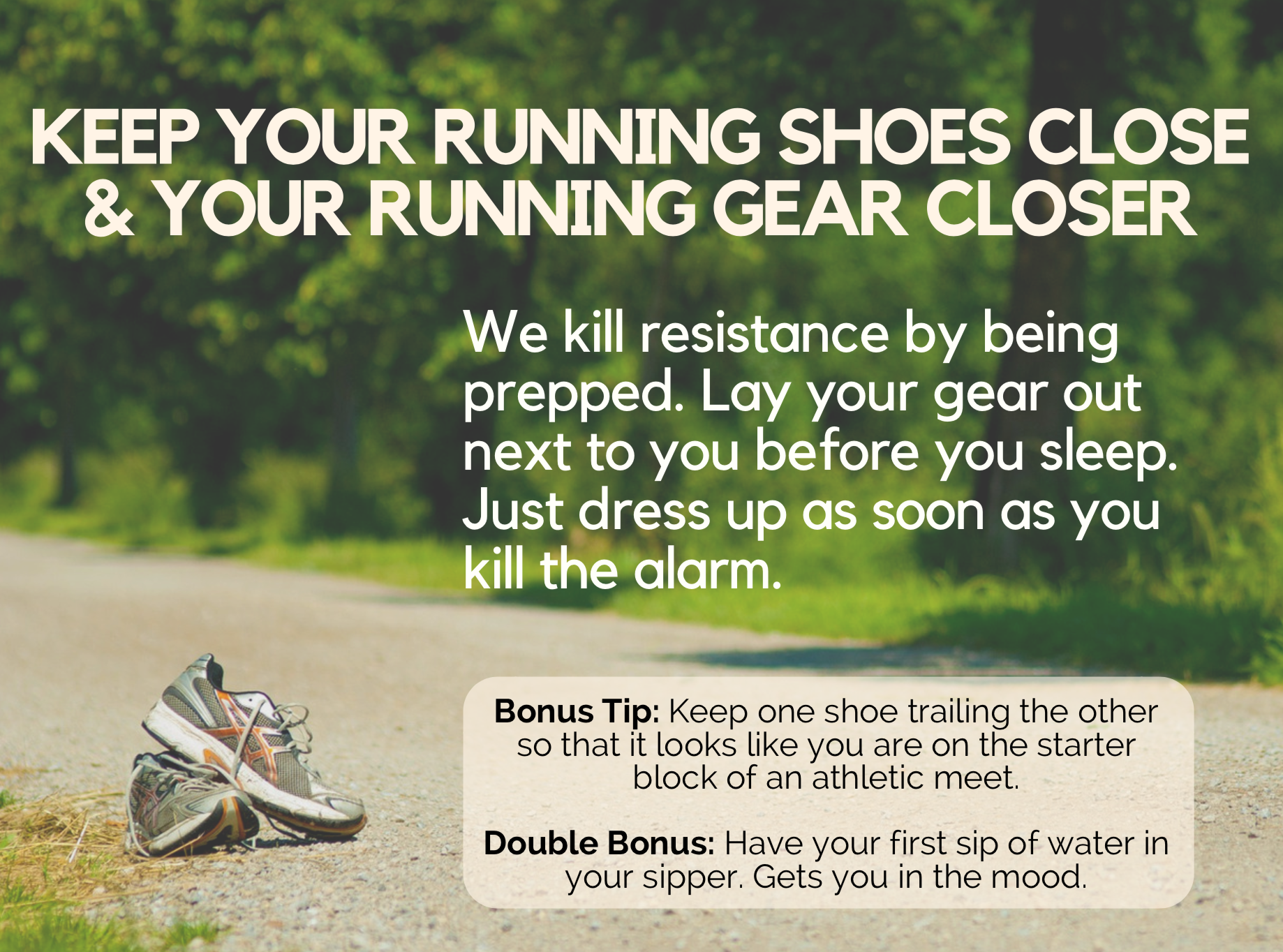
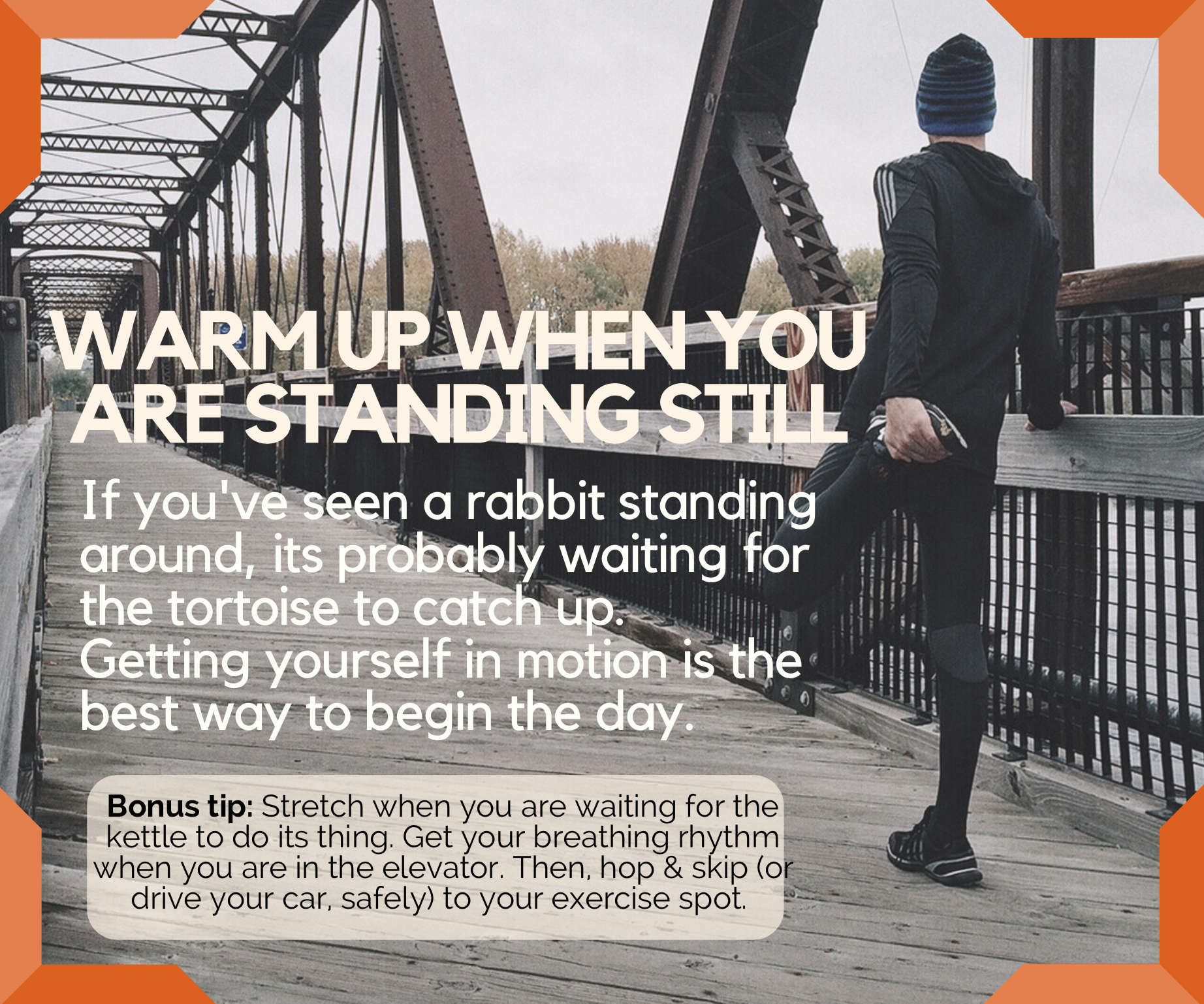
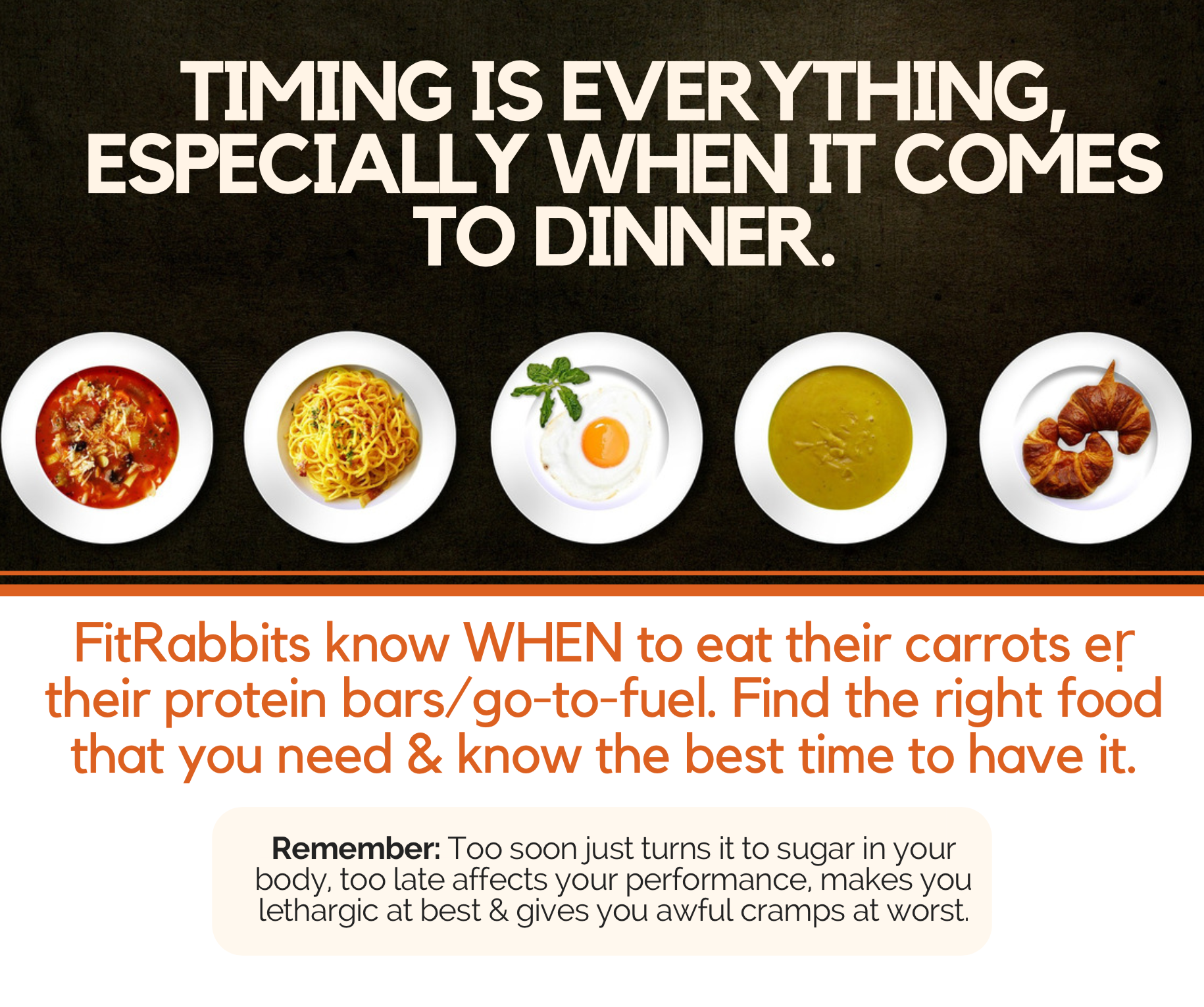
Top 5 Habits of FitRabbits


Enough of the excuses!
You, ALONE, can discover your fittest self.
So, get started!